
Views: 0 Author: Site Editor Publish Time: 2026-03-23 Origin: Site


What happens when your Outdoor Light goes dark before guests arrive? It seems like a small problem, but it can affect safety, comfort, and curb appeal. Many people expect a quick bulb swap, yet outdoor fixtures often deal with moisture, dust, and worn seals. That means the job needs more care than changing a bulb indoors. In this article, you will learn how to prepare, open the fixture, replace the bulb, and test it the right way. We will also explain how to choose the correct replacement and what to check if the light still does not work. For decorative fixtures, including some Maystar designs, we will also note when the unit uses integrated LED parts.
Start here every time. Turn off the wall switch, then shut off power at the breaker if possible. The switch alone is not always enough, especially for a motion sensor fixture or a metal housing exposed to moisture. Outdoor fixtures live in a harsher environment, so extra caution is worth it.
If you are not sure which breaker controls the light, switch off the main power for a short time. It is a small inconvenience, but it lowers the risk of shock. If you have a voltage tester, use it before touching the socket or internal parts.
Note: If the Outdoor Light is motion-activated, use the breaker first. Those fixtures can switch on without warning.
Even an LED bulb can stay warm after use. Halogen and incandescent bulbs can get very hot. Wait at least 10 to 15 minutes before you touch the bulb or the cover. If the fixture sits above a garage or in direct sun, the housing may stay warm longer.
A quick touch on the outer cover can help you judge whether it is safe. If it still feels hot, wait a little more. It is better to lose a few minutes than rush and burn your hand.
Outdoor fixtures open in different ways. Some have small screws around the base. Others use clips, twist-lock covers, or a cage over the glass. Hold the cover as you loosen it so it does not slip and break.
Do not force it. If it does not move easily, stop and check again. Hidden screws and tight seals are common. Many broken covers happen because someone twists the wrong part.
Once the bulb is exposed, grip it firmly and turn it counterclockwise. If it sticks, use rubber gloves or a dry cloth for better grip. Move slowly. Outdoor threads can seize after years of dust, moisture, and heat changes.
If the bulb breaks, keep the power off. Let the base cool, then remove it carefully with pliers. Wrap the broken part with a cloth first if needed. The goal is control, not force.
This step is easy to skip, but it matters. Wipe away dust, dead insects, and grime inside the housing. Clean the glass or lens if it looks cloudy. A dirty fixture blocks light and makes the new bulb seem weaker than it is.
A small brush helps around corners and seals. A dry cloth is usually enough for the socket area. Avoid getting moisture near electrical parts.
Now install the replacement bulb. Turn it clockwise until it feels snug. Stop there. Overtightening can damage the socket or make the next change harder than it needs to be.
Match the new bulb to the fixture in three simple ways: base type, bulb shape, and outdoor rating. If one of those is wrong, the light may not fit, may not seal well, or may fail early.
Put the cover, screws, clips, and seals back exactly as they were. Check that any gasket or sealing ring sits flat. One small gap can let in water, and water is the enemy of a reliable Outdoor Light.
Restore power at the breaker or switch, then test the light. If it turns on right away, the job is done. If not, do not panic. Most problems after a bulb change are still easy to check.
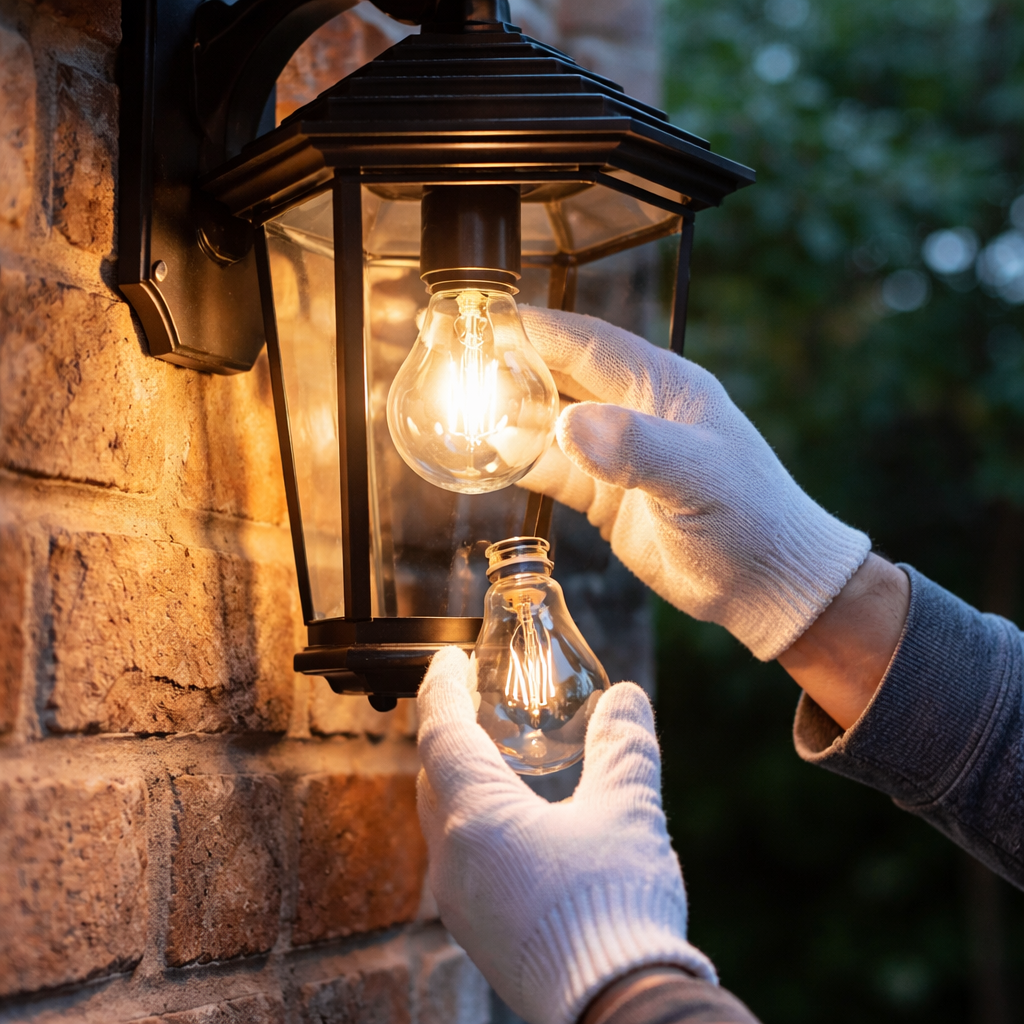
Picking the right bulb saves time and prevents repeat work. Use the old bulb or the fixture label as your guide.
Many outdoor fixtures use a standard screw base such as E26, but not all do. Some use smaller bases, special reflector shapes, or decorative bulbs. The wrong base will not seat correctly. The wrong shape may hit the cover or block airflow.
This is especially useful when replacing a bulb in a Maystar Outdoor Light with an enclosed or decorative housing.
Brightness matters. A front entry usually needs a softer, welcoming light. A security area often needs more output. Lumens are the best way to compare brightness because they tell you what the bulb actually delivers.
As a rough guide:
● 400–800 lumens works well for decorative porch lighting
● 800–1600 lumens fits many security and driveway uses
● Higher output may suit larger exterior areas, but it should match the fixture design and the space
Not every LED bulb belongs outside. Choose one rated for outdoor or damp/wet locations based on where the fixture sits.
● Covered area: a damp-rated bulb may work
● Fully exposed area: use a wet-rated bulb when the fixture requires it
Weather-resistant bulbs handle humidity, cold, heat, and frequent cycling better. They also help protect the socket and reduce early failure.
For most homes and properties, LED is the practical choice. It lasts longer, uses less energy, and needs fewer replacements. That matters even more for fixtures mounted high on walls or above garages.
Here is a quick comparison:
Bulb Type | Typical Strength | Best Use |
LED | Long life, low energy use, lower maintenance | Most Outdoor Light fixtures |
Halogen | Bright, clear light | Short-term use or older fixtures |
Incandescent | Warm tone, simple fit | Decorative use only, less efficient |
Tip: If the fixture is hard to reach, choose a longer-life LED first. It reduces maintenance and cuts repeat ladder work.
These are the most common. They usually have a glass box, lantern cover, or metal frame. Access is often simple: remove a few screws or twist off the cover. Bulb replacement is usually straightforward unless the glass is tight or the seal has aged.
These can be different. Some still use replaceable bulbs. Others use sealed LED units. The housing may be tighter, and the cover may not open in the same way as a porch lantern. Always check the fixture body or product label before you try to force it open.
Smaller landscape fixtures often look simple, but they may use delicate clips, hidden fasteners, or compact seals. Decorative models can combine style and weather protection, so it pays to open them carefully. This applies to brands such as Maystar, where outdoor products may include decorative glass elements and exterior-focused design.
Start with the easy checks:
● Is the breaker back on?
● Is the wall switch on?
● Is the bulb fully seated?
● Did the cover go back on without pressing against the bulb?
It sounds basic, but these simple issues solve many “new bulb still dead” cases.
If the bulb is correct and power is on, look inside the fixture. Corrosion, moisture, dirt, and worn contacts can stop the light from working. If the socket looks burned, loose, or heavily rusted, the problem may be the fixture, not the bulb.
Here are a few common causes:
Problem | What You May Notice | What It Means |
Loose bulb | Flicker or no light | Bulb not seated well |
Corroded socket | Green, white, or rusty buildup | Moisture has entered |
Tripped breaker | No power at all | Circuit issue or overload |
Faulty switch or wiring | Bulb still dead after checks | Fixture may need repair |
If the light still fails after these checks, it may be time to replace the fixture or ask a qualified electrician to inspect it.
This catches many people off guard. Some modern outdoor fixtures do not use a standard replaceable bulb. Instead, they use an integrated LED module built into the fixture. In that case, you cannot solve the problem by swapping a bulb.
Look for clues such as:
● No visible bulb base
● A sealed lighting panel
● Product labeling that says “integrated LED”
● A housing that does not open at the lamp area
If you see these signs, the fix may involve replacing the LED module or the whole fixture. That is common in many floodlights and some decorative outdoor units.
Good Outdoor Light performance does not depend only on bulb replacement. A small amount of routine care can also improve brightness, reduce moisture risk, and help the fixture stay in good condition over time. Based on the points above, this section can be presented more clearly by combining a short lead-in with a practical table.
Care Focus | What to Do | Why It Matters |
Keep the Glass, Cover, and Seals Clean | Clean the glass, cover, and gasket area regularly. | It helps improve light output and keeps the fixture dry. |
Protect the Fixture From Moisture | Check that the cover sits evenly and the screws are snug after each bulb change. | It helps prevent corrosion, weak contact, and early failure. |
Replace the Bulb Before Performance Drops Too Much | Replace the bulb when the light becomes dim or uneven. | It helps improve safety, appearance, and daily use. |
This format keeps the content simple, practical, and easy to scan. It also makes the three care points more structured, so readers can quickly understand what to do and why each step matters.
Knowing how to change an Outdoor Light bulb the right way makes a common task safer and easier. The main steps are simple: turn off the power, let the bulb cool, open the fixture carefully, install the correct outdoor-rated bulb, and close it tightly so it stays protected from moisture. If the light still does not work, check the socket, power supply, and fixture type before replacing anything else. Some fixtures use integrated LEDs, so they need a different fix. For readers who value dependable outdoor lighting, Zhongshan Maystar Lighting Co., Ltd. offers products designed for durability, efficient illumination, and attractive exterior style. Their outdoor lighting solutions can help improve safety, appearance, and long-term convenience in both residential and commercial spaces.
A: Turn off the switch and, if possible, the breaker. Let the bulb cool, open the fixture carefully, remove the old bulb, install the new one, and close the Outdoor Light tightly.
A: Check whether the bulb is fully seated, the breaker is on, and the switch works. If the Outdoor Light still stays dark, inspect the socket for moisture, corrosion, or damage.
A: Use a bulb that matches the base, shape, and brightness needs of the fixture. An Outdoor Light in an exposed area should also use a bulb rated for outdoor or wet-location use.
A: Look for a sealed light panel, no visible bulb base, or a label that says integrated LED. In that case, the Outdoor Light may need module or fixture replacement instead of a new bulb.
A: In most cases, yes. LED bulbs last longer, use less energy, and need fewer replacements, so they are often the best choice for an Outdoor Light.
A: Usually, no. The cost is often low if the fixture uses a standard bulb. It becomes higher only when the Outdoor Light has a damaged socket or a non-replaceable integrated LED system.


