
Views: 0 Author: Site Editor Publish Time: 2026-03-20 Origin: Site


A dark entrance can make even a nice home feel incomplete at night. A well-placed Outdoor Light improves visibility, supports safety, and gives the exterior a cleaner look. It can brighten the front door, guide people along walkways, and reduce shadowed areas near side walls. Choosing a durable fixture from a trusted brand like Maystar can also improve long-term performance and design consistency. In this article, you will learn how to install an outdoor light fixture step by step. We will cover the tools you need, basic safety checks, wiring, mounting, sealing, and final testing. By the end, you will understand how to complete the job neatly and confidently.
A clean installation starts before the first screw comes out. Good prep saves time, reduces wiring mistakes, and helps the finished light sit straight on the wall.
Start at the breaker panel and switch off the circuit that feeds the old or planned light location. Do not rely only on the wall switch. A switch can stop the light from turning on, but the wiring may still be live. After shutting off the breaker, use a voltage tester to confirm the circuit is dead before touching any wire.
If the panel is not clearly labeled, pause and verify the correct breaker before you continue. This step matters more than speed. If local regulations require it, or if the wiring condition looks uncertain, bring in a licensed electrician for inspection and connection work. Outdoor electrical work should always follow local codes and weatherproof installation rules.
Note: Always test the circuit before and after installation. It is the fastest way to confirm the line is safe and the finished connection works as expected.
Once the power is off, inspect the wall surface and the existing electrical box. The box should be stable, dry, and suitable for exterior use. If it is loose, cracked, rusted, or not rated for outdoor conditions, replace it before installing the fixture. A weatherproof box gives the light a safer base and helps protect the wiring from moisture.
Now check the mounting surface. Brick, stucco, siding, and wood all need slightly different handling. On lap siding, a mounting block can help the fixture sit straight and seal better against the wall. Also look for gaps, old caulk, insect debris, or paint buildup around the opening. Clean the area so the new fixture can sit flat.
If you are installing a light where no box exists, stop here and plan the wiring path carefully. For some homes, that means running cable from an indoor lighting circuit. For others, it may mean using a protected spur or a new junction point. A neat setup starts with the right box in the right place.
Open the fixture canopy and identify the wires. In most standard setups, black connects to black for the hot line, white connects to white for neutral, and the green or bare wire connects to ground. Use quality wire connectors and make each join tight and clean. After the connections are made, fold the wires carefully into the box so they do not pinch behind the fixture.
Keep the wiring organized. Do not force long wire loops into a tight space, and do not leave exposed copper outside the connector. If the fixture includes its own lead wires, follow the manufacturer’s wiring diagram first. Some outdoor wall lights also include extra wires for sensors, dimming, or photocell controls. Those should be connected exactly as directed in the product instructions.
Where moisture exposure is possible, tidy work matters even more. Outdoor locations deal with temperature change, humidity, wind, and insects. Good wire placement and proper sealing help prevent small issues from turning into service problems later.
After the wiring is complete, attach the mounting bracket and align the fixture body. Tighten the screws evenly so the light sits flush against the wall. Do not overtighten one side first. That can tilt the fixture, strain the bracket, or leave a visible gap along the edge.
Before fully tightening, step back and check the alignment from a few angles. A light can look level up close but appear crooked from the driveway or walkway. Once the position looks right, secure all fasteners and confirm the fixture does not shift when lightly pressed.
For heavier exterior lights, use the hardware provided by the manufacturer and make sure the box can support the load. Decorative outdoor fixtures may look light, but metal housings and glass elements can add weight. A stable mount improves both safety and appearance.
When the fixture is mounted, seal any exposed gaps between the fixture base and the wall using exterior-grade caulk or silicone sealant. This helps block water, insects, and debris. Leave drainage paths open if the product instructions call for them. Not every edge should be sealed the same way, so check the fixture guidance.
Restore power at the breaker and turn on the light. Test brightness, switching response, and overall stability. If the fixture includes a motion sensor or dusk-to-dawn function, test those features too. Look again at the base, the screw heads, and the wall contact line. A clean finish tells you the install is secure.
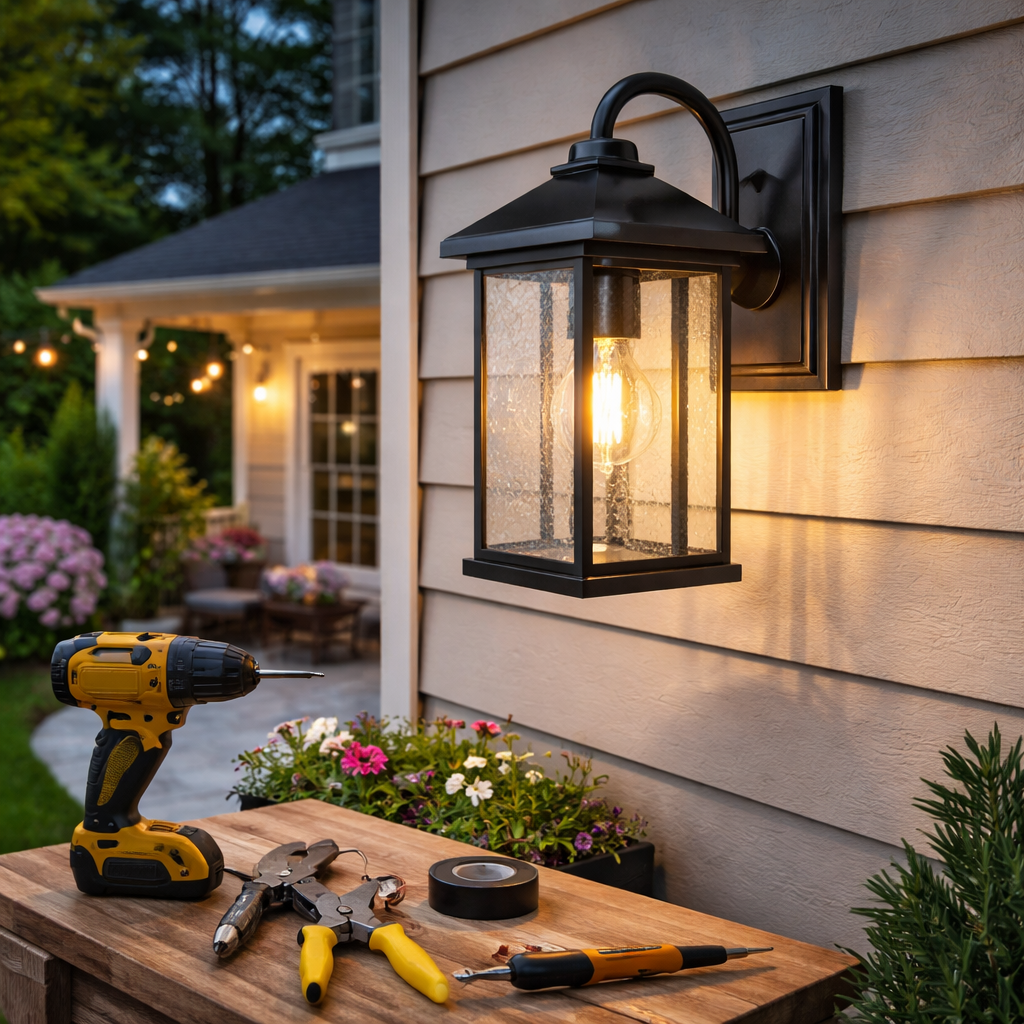
A smooth install often begins with a smart fixture choice. The wrong size, finish, or rating can make a simple project harder than it needs to be.
Before choosing a fixture, it helps to know why exterior rating matters. An Outdoor Light should not only look good. It should also handle weather well and stay reliable over time.
Key Point | What It Means | Why It Matters |
Outdoor use | Made for rain, dust, and temperature changes. | It performs better outside. |
Not the same as indoor lights | Indoor fixtures may look similar. | They can fail early outdoors. |
Better durability | Built to resist fading and corrosion. | It helps the light last longer. |
Safer structure | Works well with sealing and protected parts. | It supports safer installation. |
Exposed locations | Important for patios and garden walls. | These areas need more protection. |
Think about the job the light needs to do. A front door light should brighten the entrance without glare. A patio fixture should feel warm and comfortable during the evening. A garage-side light may need wider coverage and stronger output. A walkway light should guide movement clearly without becoming harsh.
This is also where size matters. A small fixture can look lost on a large wall. A very large fixture can overwhelm a narrow door frame or compact porch. Check the height, width, and projection before buying.
The best Outdoor Light does two things at once: it looks good in daylight and performs well at night. Clean lines, good materials, and the right finish improve curb appeal, but light output and beam spread matter just as much.
Maystar is one example of a brand that connects decorative style and practical exterior use. Its outdoor range is positioned around durability, energy-efficient lighting, and use across gardens, patios, pathways, and larger exterior projects. That makes it easier to match visual appeal with daily function, especially when a project needs more than a single fixture.
Tip: When choosing fixture size, compare it to the door, wall width, and mounting height first. It helps you avoid a light that feels too small or too heavy for the space.
Getting tools ready before the work starts saves time and lowers frustration. It also keeps the installation flow smooth, especially if the light sits high on the wall or the work area is outside in changing weather. The source text lists most of the basics, and they cover nearly everything needed for a standard wall-light replacement.
Tool or Material | What We Use It For | Why It Helps |
Voltage tester | Check if the circuit is dead | It supports safe handling before wiring |
Screwdriver | Remove old screws and fix new hardware | It keeps mounting work controlled |
Drill | Create holes or fix anchors | It helps on brick, wood, or siding |
Wire connectors | Join conductors securely | They keep the wiring stable |
Ladder | Reach higher wall positions | It gives safer access than stretching |
Mounting bracket | Support the fixture body | It helps the light sit straight |
Mounting block | Level the light on lap siding | It improves fit and wall contact |
Exterior caulk | Seal around the fixture base | It helps block moisture and insects |
It is also smart to keep gloves, a cloth, and the product instructions nearby. Gloves help when handling rough edges or old metal parts. A cloth lets us wipe off dust, fingerprints, or extra sealant before the final test. Those details may seem small, yet they help the finished fixture look professionally installed instead of quickly attached.
This is usually the simplest option. If there is already an exterior-rated box in the correct location, you can focus on compatibility, wire condition, and mounting alignment. It saves time and reduces wall repair work.
Still, do not assume an old box is ready to use. Check that it is secure, weather-appropriate, and large enough for the wire connections and fixture canopy.
Exterior walls vary a lot. Siding may need a mounting block. Brick and stucco may need anchors or masonry-specific drilling methods. Wood may be simpler, but it still needs clean sealing around the backplate.
The goal is always the same: a flat, stable connection that keeps water out and holds the fixture firmly over time.
Neat wire placement is not only about appearance. It also helps reduce strain on the conductors and lowers the chance of trapped wires behind the mounting plate. If you are routing cable through the wall, keep the path tidy and slightly protective against moisture entry where needed.
For setups connected from an existing lighting or power circuit, outdoor protection becomes even more important. Some installations may require RCD protection or a fused connection path, depending on the load and local code.
Before you finish, check every exterior contact point. The fixture should sit tight, the screws should be fully seated, and the sealant should cover the needed gaps without looking messy. Outdoor performance depends on these small details.
Now it is time to make sure the work looks right and performs well.
Switch the light on and view it from both near and far. Confirm it reaches the area you wanted to light and does not create awkward glare. Gently check the fixture body again to make sure it feels solid.
If the light has a motion sensor, test it by walking through the detection zone. If it has a dusk-to-dawn function, review the setup instructions and make sure the sensor is not blocked.
Look at the light in daylight if possible. Small alignment issues often show more clearly then. Confirm the fixture is level, the base sits flat, and the sealant line looks neat. Wipe away dust or fingerprints for a clean final appearance.
Note: A light can function correctly and still look unfinished. Final alignment and sealing are what make the job feel complete.
Where you install an Outdoor Light affects both how it looks and how well it works. A good fixture can lose much of its value if it is placed in the wrong area. Before choosing a location, it helps to think about visibility, comfort, and how the light fits the overall exterior layout.
Location | Main Benefit | Placement Notes |
Front Door and Entryway | Improves visibility and makes the entrance feel more welcoming. | A pair of matching wall lights works well for wider entrances, while a single fixture may suit a smaller doorway. |
Patio and Backyard | Supports evening use, outdoor meals, and a more comfortable mood. | Brightness should feel soft and useful, not too harsh for sitting areas. |
Garage, Side Wall, and Walkway | Provides reliable coverage and better guidance around the home. | Side walls and walkways need clear guidance lighting, while garage areas often need broader visibility. |
Larger Exterior Layouts | Helps keep the design consistent across different zones. | Coordinated fixture lines, such as those from Maystar, can work well for projects needing matching outdoor lights in several spaces. |
Note: The best placement usually balances safety, comfort, and exterior appearance at the same time.
Learning how to install outdoor light fixture becomes much easier when you follow a clear process from start to finish. We begin by shutting off the power, testing the circuit, and preparing the wall and electrical box. Then we connect the wires carefully, mount the fixture straight, seal the edges well, and restore power for final testing. Each step supports a safer and more reliable result. A properly installed Outdoor Light improves visibility, daily convenience, and the overall look of the exterior. It also helps the space feel more complete and welcoming after dark. When choosing a new fixture, outdoor-rated products offer better durability and clearer performance in changing weather. Zhongshan Maystar Lighting Co., Ltd. provides outdoor lighting solutions that combine practical function, visual appeal, and dependable quality for porches, patios, pathways, and other exterior spaces.
A: Turn off power at the breaker first. Then use a voltage tester, inspect the wall box, and make sure the fixture is rated for outdoor use. A safe start makes the Outdoor Light installation much easier.
A: Shut off power, test the circuit, prepare the mounting area, connect the hot, neutral, and ground wires, secure the bracket, mount the fixture, seal the edges, and test the Outdoor Light after restoring power.
A: Sealing helps block moisture, dust, and insects. It also protects the wiring area and supports longer outdoor performance. A well-sealed Outdoor Light usually looks cleaner and lasts longer.
A: Cost depends on the fixture, tools, wall condition, and whether an existing box is already in place. A simple replacement costs less than a new wired installation. Outdoor Light prices also vary by size, finish, and features.
A: The right Outdoor Light improves visibility, supports safety, and matches the space better. It also makes installation smoother because the fixture size, rating, and mounting style fit the location more naturally.
A: Check the breaker, test the switch, confirm wire connections, and make sure the bulb or built-in light source works properly. If the Outdoor Light still fails, inspect the box and wiring again or ask a qualified electrician to help.


