
Views: 0 Author: Site Editor Publish Time: 2026-03-18 Origin: Site


Is your outdoor light fixture outdated or not providing enough illumination? Replacing it can be one of the simplest and most effective ways to refresh your home’s exterior. Not only does it improve curb appeal, but it also enhances safety at night and gives your space a more polished look.
In this article, we will guide you through the steps involved in replacing your outdoor light fixture. You will learn how to remove the old fixture, install the new one securely, and test it for functionality. By the end, you'll understand how choosing a durable, stylish Outdoor Light fixture, like those from brands such as Maystar, can improve both the look and the performance of your outdoor lighting.
Take a moment to examine the current outdoor light. Is the mounting box secure? Is it still in good condition? Most outdoor lights are attached to a standard electrical box. This box must be in good shape to support the new fixture, so check for any cracks or rust. If the box is loose, it will need to be repaired or replaced before moving forward.
Before you begin replacing your outdoor light fixture, the first crucial step is ensuring safety by turning off the power. You should always turn off the power at the breaker box, not just at the wall switch. Wall switches only control the fixture’s function, not the electrical current. Using a voltage tester will ensure that there’s no live power running to the fixture before you start working.
In addition to safety, having the right tools for the job will make the process easier and faster. Here's a list of essential tools you’ll need for the job:
Tool | Purpose |
Screwdriver | Used to unscrew the old fixture and install the new one. |
Pliers | For gripping and securing wires. |
Voltage Tester | Verifies that there’s no live power running through the wires. |
Wire Nuts | Used to securely twist and cap wire connections. |
Electrical Tape | Provides extra security for wire connections. |
Drill | Helps with drilling holes for mounting if needed. |
Safety Glasses | Protects your eyes from debris and dust during installation. |
Ladder | Helps you safely reach the fixture for mounting and wiring. |
Once you’ve gathered your tools and ensured the power is off, keep your new fixture nearby so you can easily mount it after removing the old one. This will help you stay organized and work efficiently.
Before purchasing a new fixture, make sure it fits the existing electrical box. Some outdoor fixtures require specific mounting hardware or brackets that may not align with your current setup. Also, ensure the fixture’s size matches the space available on your wall or entryway. A fixture that is too large or too small may not provide the intended effect.
Since the fixture will be exposed to the elements, make sure the new one is rated for outdoor use. Fixtures designed for exterior use are specially coated to withstand rain, heat, and UV damage. A quality fixture from brands like Maystar offers long-lasting performance under harsh weather conditions.
Tip: Always review the manufacturer’s recommendations for weather resistance and ensure the fixture’s rating is suitable for your climate, especially in areas prone to heavy rain or extreme heat.
Once you're ready to begin, follow these steps carefully to replace the old fixture with a new one.
Start by removing the old fixture. First, unscrew any covers or bulbs. Then, loosen the screws or caps that hold the fixture in place. Make sure to support the light as you loosen the screws so it doesn't fall.
Once the fixture is free, carefully lower it, making sure not to damage any exposed wiring. If the wires are still attached, let the fixture hang gently while you prepare for the next step.
Examine the wires connected to the old fixture. Typically, you’ll find a black wire (hot), white wire (neutral), and a ground wire (either green or bare copper). It’s essential to ensure the wires are in good condition and long enough to reach the new fixture. Take a photo of the wiring setup before disconnecting anything, as this can help when connecting the new fixture.
If the wires are frayed or damaged, trim them back to ensure a clean connection.
Next, install the new fixture's mounting bracket onto the electrical box. Ensure that the bracket is securely fastened and level. Once the bracket is in place, connect the wires. The black wire from the wall connects to the black (hot) wire of the new fixture, and the white wire connects to the white wire of the new fixture. Finally, attach the ground wire to the grounding screw on the mounting bracket.
Use wire nuts to twist the wires together, making sure the connections are tight and secure. You can also use electrical tape around the wire nuts for extra hold.
Once the wiring is connected, carefully push the wires back into the electrical box, ensuring they are not pinched or stressed. Place the new fixture onto the mounting bracket and secure it using the provided screws or caps. If the fixture leaves gaps along the edges, apply exterior-grade sealant to prevent water from entering. Make sure the fixture is level before fully tightening the screws.
Once everything is securely mounted, restore power at the breaker. Turn on the switch to test the new fixture. If it includes a motion sensor or dusk-to-dawn feature, test it according to the manufacturer’s instructions. If the light doesn’t turn on, check the connections, wiring, and bulb to ensure everything is installed properly.
Note: Double-check the fixture’s alignment to ensure that it is properly directed, especially if it has a sensor. A misaligned sensor may result in ineffective operation.
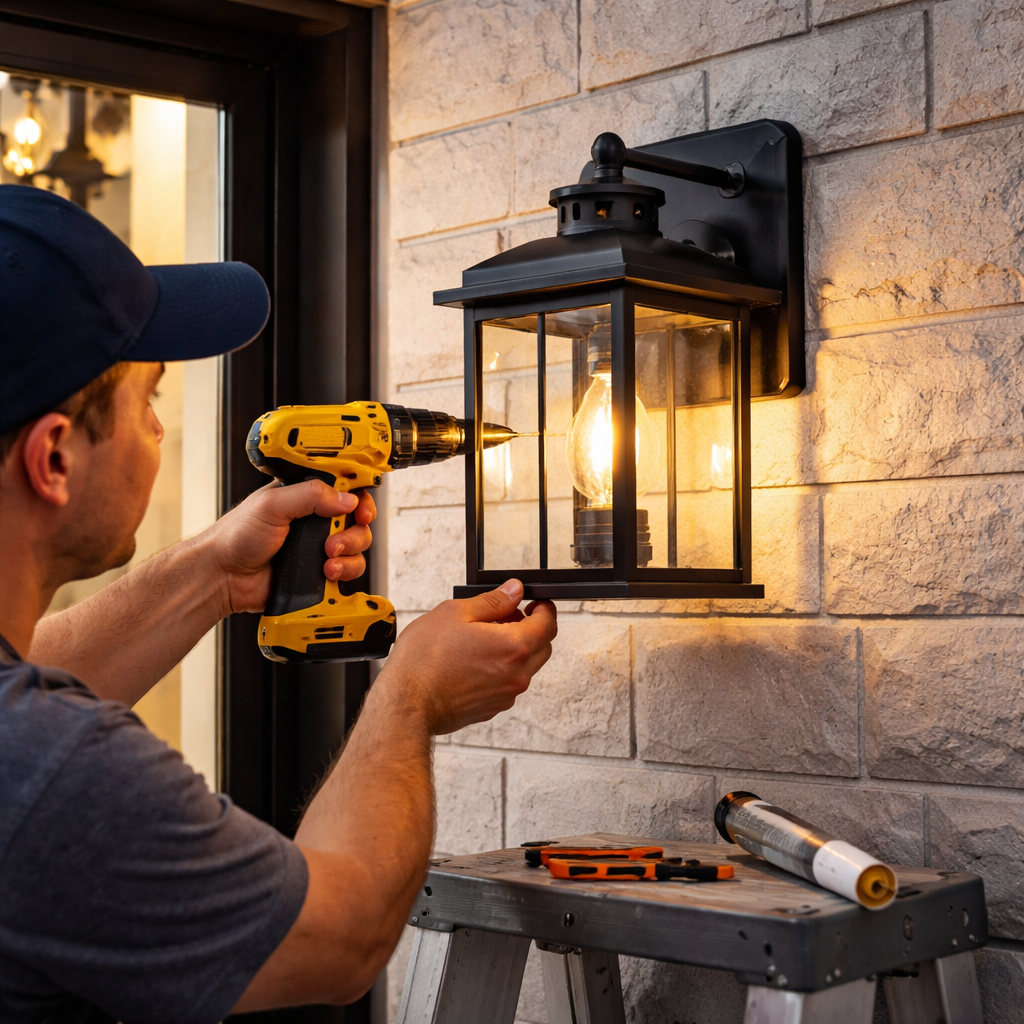
When choosing a new fixture, make sure it complements the size and style of your home. A small, minimalist fixture may be perfect for a compact entry, while a larger fixture might suit a spacious patio or garage entry. A well-proportioned fixture helps maintain balance and makes the area look polished.
When selecting your new outdoor light fixture, it's important to think about its functionality. The type of light you choose will depend on how and when you want it to operate. Below are some popular options, each with its own advantages:
Outdoor Light Type | Benefits |
LED Lights | Energy-efficient, long-lasting, and bright lighting. |
Motion Sensor Lights | Turns on automatically with detected movement. |
Dusk-to-Dawn Lights | Turns on at dusk and off at dawn automatically. |
Each type of outdoor light serves a different purpose, so consider your specific needs, whether it's for energy savings, security, or convenience.
For maximum durability, look for a fixture from a trusted brand like Maystar. Known for its energy-efficient and weather-resistant products, Maystar’s outdoor lights are designed to withstand harsh conditions while maintaining their stylish look. Whether for residential or commercial properties, a reliable fixture ensures long-term performance.
Choose a fixture style that enhances your home's overall appearance. Whether you’re looking for a modern, sleek design or a more traditional lantern style, the right fixture should align with the design of your entryway, porch, or garden.
To ensure your new outdoor light fixture works properly and safely, it’s crucial to understand the role of each wire. The hot, neutral, and ground wires each have an important job in the circuit. Here’s a breakdown:
Wire Type | Purpose |
Hot Wire | Usually black, it provides the electricity to the fixture. |
Neutral Wire | Usually white, it completes the electrical circuit. |
Ground Wire | Usually green or bare copper, it ensures safety by directing excess electricity to the ground. |
Make sure you connect each wire to its corresponding terminal on the fixture. Improper connections can cause electrical issues or hazards, so take care to follow the wiring instructions.
Wire nuts are used to secure the wire connections. Make sure the wires are tightly twisted and the wire nuts are firmly in place. For mounting, always follow the manufacturer’s guidelines to ensure the fixture is securely attached to the wall and the electrical box.
When installing outdoor light fixtures, it's important to account for the surface material. Wood and vinyl are some of the easier materials to work with, making it straightforward to drill and mount your fixture securely. However, it’s important to ensure that the fixture is firmly mounted to avoid any shifting over time. In some cases, a mounting block can be used to provide a more stable base and ensure that the fixture sits evenly on the wall.
Surface Type | Installation Considerations |
Wood | Easy to drill into, allowing for secure mounting. Use a mounting block for added stability. |
Vinyl | Also easy to drill into, but ensure the fixture is level. A mounting block can provide a stable base if necessary. |
This method ensures that your outdoor light fixture is secure and aligned properly, offering both durability and a clean appearance.
When replacing an outdoor light fixture on tougher surfaces like brick, stone, or stucco, extra care is needed. These materials are much harder to drill into, so you will likely need masonry anchors and a hammer drill to ensure a secure fit. For particularly tough surfaces, it may be helpful to consult a professional for installation, as the right tools and techniques can make a significant difference in avoiding damage to the wall.
If the new fixture’s mounting pattern doesn’t align with the old holes, using a mounting block or adapter plate can help. These plates not only make installation easier but also help to create a secure, stable fit. Additionally, they can cover any old screw marks or damage from the previous fixture, giving the wall a cleaner, more finished look. Using a mounting block ensures that the fixture sits flat and doesn’t shift over time.
Once the new outdoor light fixture is installed, it’s important to do a thorough final check to ensure everything is working properly and the installation looks professional. This includes testing the light's functionality, ensuring proper alignment, and cleaning the area.
Final Check | Action |
Test Brightness and Sensor Functions | Verify light illuminates properly and that sensors activate as intended. |
Confirm Fixture Alignment | Ensure the fixture is level and aligned correctly with no gaps. |
Seal Edges and Clean | Seal any gaps with weather-resistant sealant and clean the surrounding area. |
Tip: For multiple installations across a property, ensure consistency in fixture selection and alignment to maintain a cohesive look.
Replacing an outdoor light fixture is a straightforward project that can greatly enhance both the functionality and appearance of your home. By following the installation steps carefully, selecting the right fixture, and using proper wiring and mounting techniques, you can ensure a secure and reliable lighting setup. Choosing a high-quality fixture, like those from Zhongshan Maystar Lighting Co., Ltd., guarantees long-term durability and energy-efficient performance. Whether you’re upgrading for better visibility or just updating the look of your exterior, the right Outdoor Light fixture will enhance your home’s appeal and provide reliable illumination for years to come.
A: To replace an outdoor light fixture, start by turning off the power at the breaker. Then, remove the old fixture by unscrewing it from the mounting bracket and disconnecting the wires. Attach the new fixture to the same mounting bracket, connect the wires (black to black, white to white, and ground to ground), secure the fixture, and restore power to test the light.
A: When choosing an Outdoor Light, consider the size of the space, the fixture’s energy efficiency, and its durability against weather conditions. LED lights are great for energy savings, while motion sensor and dusk-to-dawn lights offer additional convenience and security.
A: Yes, you can usually reuse the existing electrical box as long as it’s in good condition and securely mounted. Ensure it can support the weight of the new fixture and that the wiring is compatible.
A: If your new Outdoor Light isn’t working, double-check the wire connections to ensure they are secure and properly connected. Also, confirm that the power is turned on and that the bulb is functioning. A tripped breaker or faulty wiring might also be the cause.
A: The cost of replacing an outdoor light fixture depends on the type of light you choose, the complexity of the installation, and whether you hire a professional. On average, you can expect to spend between $50 to $200 for the fixture, plus any installation costs.


