
Views: 0 Author: Site Editor Publish Time: 2026-03-27 Origin: Site


Why do some outdoor spaces feel warm and inviting, while others look harsh at night? In many cases, the bulb color is the real reason. Choosing the right bulb for an Outdoor Light affects more than brightness. It shapes curb appeal, comfort, and how safely people move after dark.
Most people asking what color bulb for outdoor light really mean color temperature. For most homes, warm white, around 2700K to 3000K, is the best place to start. It works well for porches, patios, and entryways, and it looks natural outside. In this article, we will explain how bulb color works, where cooler light helps, and how to choose the best option for each space, including when comparing fixtures from brands like Maystar.
For most residential spaces, warm white is the safest and most attractive choice. It creates a softer look, reduces harsh contrast, and makes the home feel more inviting. It also works well on common outdoor surfaces such as brick, wood, stone, painted siding, and textured walls.
Warm light usually falls between 2500K and 3000K. In that range, it supports curb appeal without making the exterior feel too yellow or too dim. It also feels more natural in the evening, especially when people are relaxing outdoors or arriving home after dark.
If you want one answer that works for most homes, 2700K is it. It is warm, comfortable, and easy on the eyes. It suits front doors, porches, wall lanterns, and decorative sconces. It also pairs well with indoor lighting, which helps the whole property feel more connected.
This color temperature is especially useful when the goal is mood, not sharp visibility. It flatters warm-toned finishes and keeps the exterior from looking cold or overlit.
Note: If your home has warm materials such as wood trim, brick, or beige stone, 2700K usually looks more natural than cooler white light.
There are times when a warmer bulb is not the best fit. If you want a cleaner, crisper look, or if you need slightly stronger visibility, a bulb in the 3000K to 4000K range can work better.
This range is often useful for:
● pathways
● steps
● side yards
● garden accents
● outdoor work areas
● modern exterior designs
At 3000K, the light still feels comfortable, but it looks a little clearer and less amber. At 3500K to 4000K, the light becomes more neutral. It can make plants, paving, and edges look more defined at night.
Some outdoor areas need function first. In those cases, a brighter white bulb can be a practical choice. Garage exteriors, utility zones, and security-focused locations often benefit from light that feels stronger and more focused.
That does not mean every outdoor bulb should be cool white. It simply means the bulb color should match the purpose of the space. A bright white bulb may improve sightlines near a garage door or shed, but the same bulb may feel too sharp on a front porch or patio.
Here is a quick reference table you can use when planning an exterior lighting setup:
Outdoor area | Recommended bulb color | Why it works |
Front door and porch | 2700K–3000K | Warm, welcoming, balanced |
Patio and deck | 2200K–3000K | Relaxed mood, softer atmosphere |
Walkways and steps | 3000K–4000K | Better visibility and contrast |
Garden beds and trees | 3000K–4000K | More natural detail on plants |
Garage exterior | 4000K–5000K | Clearer visibility and safer movement |
Security areas | 4000K–5000K+ | Stronger detail and broader coverage |
The same fixture can look very different depending on the bulb color inside it. That is why color temperature matters so much in outdoor design.
Warm light helps a property feel lived-in and comfortable. It softens surfaces and creates a calmer transition between indoors and outdoors. This is why it is often the best choice for homes, hospitality spaces, and any area meant for evening use.
It also supports a more timeless appearance. Even if the fixture style is modern, a warm bulb keeps the space from feeling clinical.
Neutral white light looks brighter and more defined. It can be a good choice when you want clearer edges, stronger contrast, or a more contemporary feel. It works well in spaces where people need to see footing, surface changes, or activity areas more clearly.
Still, there is a balance. Too much neutral or cool light across the whole exterior can make the home feel flat or harsh. It is usually better used selectively than everywhere.
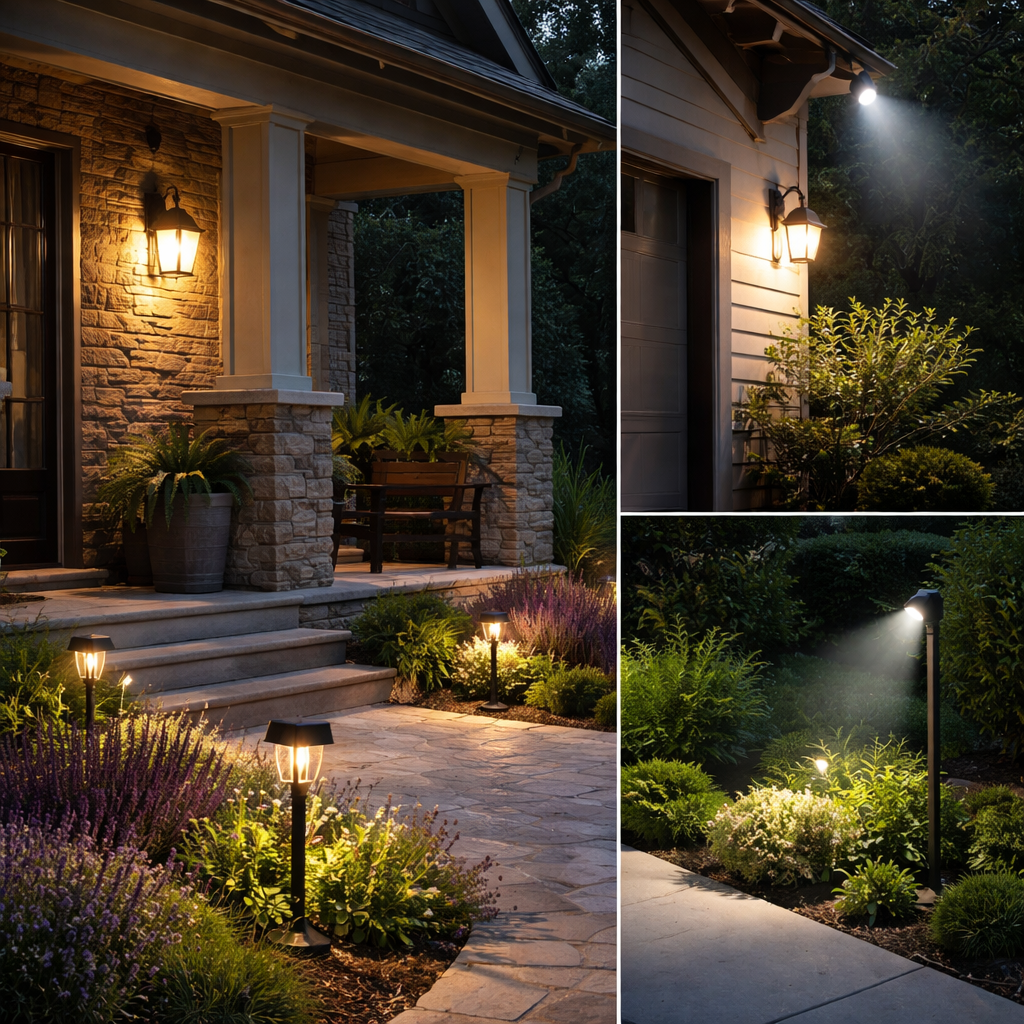
A good outdoor lighting plan does not use one bulb color for every location. It adjusts by use.
These areas shape first impressions. They should feel safe, but also inviting. In most cases, 2700K to 3000K is the best range. It gives enough visibility for keys, door hardware, and steps, while still making the entrance feel warm.
If the architecture is traditional or the finish colors are warm, lean closer to 2700K. If the style is more modern and minimal, 3000K may look cleaner.
Patios and decks are social spaces. People eat, talk, and relax there. That means the light should support comfort first. Warm bulbs, often 2200K to 3000K, are ideal because they feel softer and less intrusive.
Very warm light can be especially attractive over dining zones or lounge seating. It helps the area feel calm and intentional instead of overly bright.
Plants and textured landscape elements often benefit from slightly cooler light than sitting areas. In many cases, 3000K to 4000K works well. It helps foliage look more natural and gives better definition to trees, trellises, decorative stone, and planting beds.
If you are lighting one focal tree or a sculptural landscape feature, a more neutral bulb can add depth without making the whole yard feel cold.
Not all outdoor lights serve the same purpose. Some fixtures are meant to create a warm and stylish atmosphere, while others are designed to improve safety and visibility. Because of this, the best lighting choice often depends on how each space is used.
Lighting Type | Main Purpose | Best Light Tone | Why It Works | Common Example |
Decorative Outdoor Light | Shape mood and style | Warmer tones | Creates a soft, welcoming, and attractive look | Porch sconce |
Practical Outdoor Light | Support safety and visibility | Neutral or brighter tones | Helps people move safely and see important details clearly | Garage flood light |
This is why one property may need more than one Kelvin range. A decorative fixture and a task-focused fixture do not need to perform in the same way. Since each area has a different job, the bulb color should match its function.
Walkways and stairs need clear visibility, but they do not need to feel harsh. A bulb around 3000K to 4000K usually strikes the right balance. It improves contrast, makes edges easier to read, and supports safer movement.
For homes with older residents, frequent guests, or uneven surfaces, a slightly brighter white may be especially helpful.
Tip: Use the same Kelvin range along connected paths and steps. It keeps the lighting system easy to read and makes the whole exterior feel more polished.
Garage doors, driveways, side entries, and security zones usually benefit from stronger clarity. In these places, 4000K and above can make sense. It helps people identify movement, tools, vehicles, and door hardware more easily.
Still, use it with restraint. A very cool bulb near the main entrance can feel too stark. Many homes work best when brighter white light is limited to the most functional zones.
This comparison appears in almost every outdoor lighting discussion because it affects both style and usability. On paper, it sounds like a simple choice. In practice, it shapes the mood of the whole exterior. Warm white usually feels more natural around homes, while cool white feels brighter and more alert. Neither is always right or wrong. The better option depends on where we use it.
Warm white is usually better for residential curb appeal. It gives the exterior a softer tone and supports materials people already associate with comfort and home life. It also reduces the chance of glare and visual harshness. If the goal is to make a porch, entry, patio, or façade look attractive at night, warm light usually wins.
Cool white works better when the eye needs more immediate information. It can make garage zones, utility paths, and security areas easier to read. It also creates a brighter visual impression, even at similar brightness levels. Yet if we place it everywhere, the home can start to feel flat or severe. It draws more attention to the light itself and less to the beauty of the space. That is why many strong outdoor lighting plans use both types, though each one stays in the right place.
A quick comparison helps:
Warm white | Cool white |
softer and more welcoming | sharper and brighter |
better for patios and porches | better for security and garages |
more natural on homes | more practical in work zones |
supports atmosphere | supports visibility |
Ask one question first: what happens in this space at night? If people gather there, relax there, or arrive there, warm light is usually the answer. If they need to see details, steps, tools, or moving vehicles, a more neutral or brighter white may be better.
Many buyers choose a bulb based on brightness alone. That often leads to an exterior that feels too cold or inconsistent. First choose the right color temperature, then choose the brightness level that suits the fixture and area.
Consistency matters. A porch at 2700K next to a walkway at 5000K can feel disjointed. It is usually better to create small zones of consistent light rather than mixing several very different bulb colors in close view.
This is especially important on projects involving multiple fixture types. If you are reviewing a broader exterior collection from Maystar, look at how the porch lights, path lights, wall fixtures, and landscape accents will work together before settling on bulb color. The goal is not to use one bulb everywhere. It is to make the full lighting plan feel intentional.
LED bulbs are usually the best option for an Outdoor Light because they are efficient, long-lasting, and available in many color temperatures. They also make it easier to keep the property consistent over time. When a replacement is needed, it is much simpler to match the original light quality.
For gardens and planting areas, LEDs also help because they produce less heat than older bulb types. That makes them a sensible choice near plants, decorative materials, and enclosed fixtures.
Note: Before you buy in volume or finalize a lighting schedule, test one bulb color on-site at night. It often looks different outdoors than it does on the box.
For most homes, warm white light is still the best choice for outdoor lighting, usually in the 2700K to 3000K range. It creates a welcoming atmosphere, improves curb appeal, and works especially well for entryways, porches, patios, and other decorative outdoor spaces. When better visibility is needed, 3000K to 4000K can be a smarter option. This brighter white light is more suitable for walkways, stairs, gardens, garages, and security-focused areas where clarity matters more than mood.
The best outdoor lighting plan is not about choosing one single color temperature for every fixture. It is about matching the bulb color to the function of the space, the surrounding materials, and the way the home is used at night. Zhongshan Maystar Lighting Co., Ltd. provides outdoor lighting products with reliable performance, attractive design, and practical value, helping homeowners create exterior spaces that are both safe and visually consistent.
A: For most homes, the best Outdoor Light color is warm white, usually between 2700K and 3000K. It feels welcoming and works well for entryways, porches, patios, and other decorative outdoor areas.
A: Warm white Outdoor Light is popular because it creates a soft and inviting atmosphere. It also supports curb appeal and gives the home a more comfortable look at night.
A: The best way is to match the Outdoor Light color to the purpose of the space. Use warm white for decorative areas, and choose 3000K to 4000K when you need better visibility for paths, stairs, or gardens.
A: Yes, in some areas it is. Brighter white light in the 3000K to 4000K range can improve clarity around garages, walkways, stairs, and security-focused spaces where visibility matters more than mood.
A: The main value comes from choosing the right bulb for each space instead of using one color everywhere. A well-matched lighting setup improves function and appearance, which gives better overall value.


