
Views: 0 Author: Site Editor Publish Time: 2026-05-26 Origin: Site


Purchasing an Outdoor Light goes beyond selecting an attractive fixture. Environmental exposure, spatial scaling, and voltage requirements heavily dictate long-term performance and daily safety. Buyers frequently make critical sizing errors. They step back and notice fixtures looking drastically too small against their exterior walls. Others mistakenly install improperly rated lights in highly exposed wet zones. Sometimes, homeowners choose power infrastructures entirely incompatible with their property boundaries.
These missteps lead to premature electrical failures, frustrating returns, and wasted budgets. Creating an inviting and secure exterior relies on strategic planning rather than guesswork. This guide provides a comprehensive framework to evaluate your outdoor illumination options. You will learn to assess climate resilience, calculate power requirements, and master architectural proportionality. By following these specific steps, you ensure a confident, aesthetically pleasing, and failure-free investment for your home.
Prioritize UL/ETL Ratings: Never interchange Damp-rated (covered porches) with Wet-rated (direct rain exposure) fixtures.
Size Up to Counteract Visual Shrinkage: An outdoor light appears up to 50% smaller from 50 feet away; standard architectural formulas (e.g., 1/3 of door height) prevent proportional mismatch.
Match Power Source to Commitment Level: Understand the trade-offs between 120V Line Voltage (requires 18-inch trenching), 12V Low Voltage (DIY-friendly with transformer), and Solar (weather-dependent).
Focus on Lumens over Watts: Modern security requires 700–1,300 lumens, while landscape accents benefit from lower outputs to prevent harsh glare.
Clarify your primary lighting function before ever looking at fixture aesthetics. We often see homeowners buy a beautiful lantern only to realize it fails to illuminate their dark driveway. Establishing your core success criteria prevents this mismatch. Mixed goals usually require tiered lighting strategies. You cannot light a dining patio and secure a dark alley with the same fixture.
Security applications demand clear visibility. Focus on higher lumen outputs ranging from 700 to over 3,000 lumens. Integrate dusk-to-dawn photocells to automate your system. Utilize motion-sensing technology to surprise intruders and conserve energy. However, beware of a common pitfall. Over-lighting creates blinding glare. This intense glare casts deep, opaque shadows across your yard. Intruders use these harsh shadows to hide. A balanced, moderately bright Outdoor Light deters threats far better than a blinding spotlight.
Wayfinding focuses strictly on movement safety. Prioritize downward-directed illumination to highlight obstacles. Ensure path visibility and step safety for family and guests. Your main success metric here is consistency. Create evenly distributed pools of light. Avoid harsh glaring hotspots. A gentle, overlapping glow guides people safely without blinding them.
Aesthetic illumination highlights your property's best features. Focus on warm color temperatures between 2700K and 3000K. Use techniques like wall washing to graze textured brick or stone. Highlight architectural columns or specific trees. Do this carefully to avoid contributing to light pollution. Accent lighting should whisper, not shout.
Technical specifications determine how long your fixture will survive the elements. Overlooking weather ratings guarantees rapid equipment failure.
Understanding safety certifications prevents dangerous electrical shorts. Never guess a fixture's rating based on its appearance.
UL Damp Location: These fixtures suit only fully covered areas. Install them under deep eaves or on covered patios. They easily handle ambient moisture and humidity. They cannot withstand direct rain or snow.
UL Wet Location: Manufacturers fully seal these units against direct wind, rain, and snow. They are mandatory for exposed walls, bare posts, and unprotected landscape areas.
Certification Level | Moisture Tolerance | Ideal Installation Zones |
|---|---|---|
Dry Rated | Zero direct moisture tolerance | Indoors only (hallways, bedrooms) |
Damp Rated | Condensation and ambient humidity | Covered porches, protected entryways |
Wet Rated | Heavy rain, snow, and hose spray | Exposed walls, garden paths, open patios |
Climate dictates your material choices. Standard metals look great in mild regions. However, they are highly prone to corrosion in high-salt or high-humidity environments. If you live near the ocean, standard aluminum quickly pits and flakes.
Marine-grade brass or advanced resin is non-negotiable for coastal properties. These robust materials effectively resist aggressive salt spray. They prevent alkaline degradation over time. They cost slightly more upfront but prevent constant replacement cycles.
Modern lighting practices respect the surrounding environment. Look for Dark Sky or "Good Neighbor" compliance. Manufacturers design these fixtures to direct light strictly downward. This eliminates annoying sky glow. It stops light trespass from spilling into your neighbor's bedroom windows. It also reduces ecological disruption for nocturnal animals.
Consider wildlife-friendly options if you live in sensitive ecological zones. Turtle-friendly fixtures utilize specific 450-nanometer wavelength LEDs. This precise amber color prevents local sea turtles from becoming disoriented during nesting season. Choosing responsible fixtures demonstrates care for your local ecosystem.
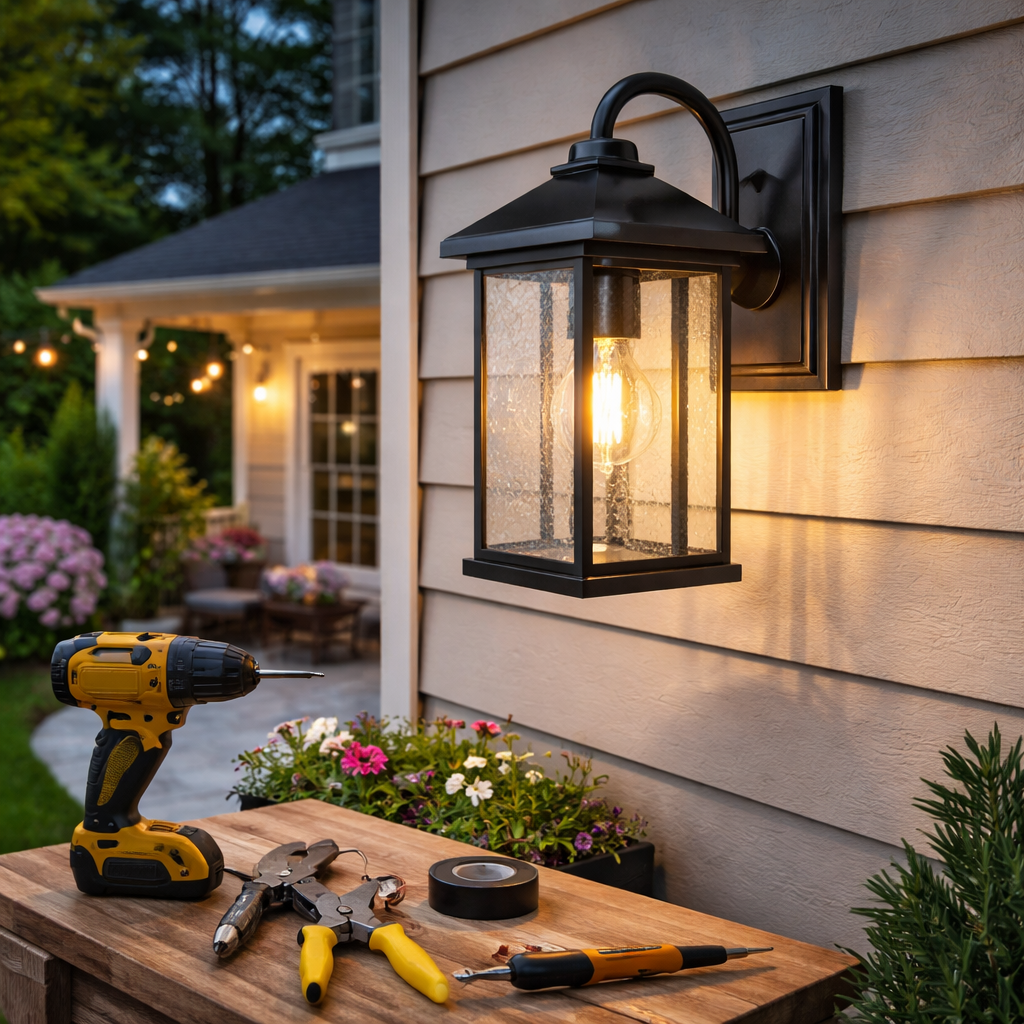
Your chosen power infrastructure dictates the difficulty of your installation. Carefully match your electrical capabilities to your landscape ambitions.
Line voltage systems tap directly into your home's main electrical grid. The implementation reality requires significant labor. You must run hardwiring and install weatherproof junction boxes. Building codes generally require you to bury protective conduit at least 18 inches underground. This often involves renting trenching equipment.
This high-commitment route is best for permanent architectural fixtures. It perfectly supports high-output security floodlights. You gain unmatched reliability and power. However, you will likely need to hire a licensed electrician.
Low voltage networks offer an excellent middle ground. The system operates via a dedicated plug-in transformer. The transformer converts 120V power down to a much safer 12V output. This makes the wiring incredibly safe to handle yourself.
You can bury this low-voltage wire just below the dirt surface. You can even hide it simply under a layer of mulch. This architecture is best for sprawling landscape lighting and path lights. It allows you to easily expand your extensive garden networks over time.
Solar technology presents the easiest installation path. The implementation reality involves absolutely zero wiring costs. You simply stake the fixture into the ground. However, these units remain heavily reliant on 6 to 8 hours of direct daily sunlight.
You face a specific risk here. You will experience diminished performance during darker winter months. Heavy snow accumulation blocks the charging panels entirely. Extended overcast periods leave your pathways dark. Use solar units for decorative accents rather than critical safety applications.
Form follows function when selecting fixture types. Each category solves a highly specific architectural challenge. Choosing the right shape ensures the light performs exactly as intended.
Wall sconces mount completely flush against your exterior walls. They cast an inviting, localized glow. They are ideal for flanking front entryways and illuminating garage doors. When choosing an Outdoor Light for a tight patio, flush mounts prevent people from bumping their heads against extending glass panels.
Hanging fixtures add immense elegance to covered areas. They require ceilings at least 8 feet high to maintain proper clearance. They work best for covered porches, pergolas, and gazebos. Always ensure you purchase a Damp-rated model, even if a roof covers the fixture. Wind often blows condensation up into the housing.
These fixtures anchor your property borders and driveway entrances.
Post lights: These are standalone pillars driven directly into the ground. They follow a standard 7-foot height. They create distinct boundaries along long driveways.
Pier mounts: These utilize base adapters. They secure standard post lights atop existing masonry or brick columns. They finish the look of structural retaining walls.
Floodlights provide highly directional, broad-beam coverage. You want to mount these fixtures high up on your siding or roofline. Target a height of 9 feet or higher. This elevation effectively prevents physical tampering. Evaluate your motion sensors carefully. Pets and passing cars frequently trigger false alarms. Look for sensors featuring adjustable sensitivity dials to eliminate nuisance tripping.
Path lights sit low to the ground. They safely guide foot traffic along driveways and winding walkways. Quality path lights utilize opaque top shielding. This design forces the light exclusively toward the ground. It prevents the bulb from shining directly into your eyes as you walk past.
Improper sizing remains the most common buyer regret. Scale and proportion change dramatically once you step outside.
Outdoor fixtures visually shrink when placed against large exterior walls and an open sky. A lantern that looks massive in a store aisle often looks minuscule mounted next to a front door. Always default to the larger size when caught between two aesthetic options.
Architects use established formulas to maintain proper visual weight. Follow these mathematical rules to ensure proportional harmony.
Single Light Configuration: When mounting one light on one side of a door, the fixture should measure roughly 1/3 the total height of the door.
Double Light Configuration: When flanking both sides of a door symmetrically, each fixture should measure roughly 1/4 the height of the door.
Haphazard placement ruins the impact of premium fixtures. Keep these precise mounting metrics in mind.
Wall Sconces: Mount these slightly above standard eye level. Aim for approximately 66 inches from the ground to the center of the light source.
Pendant Lights: Hang pendants carefully. The bottom tip of the fixture should sit roughly 6 inches above the doorframe to clear tall visitors.
Path Lights: Space path lights exactly 2 to 4 feet apart. This spacing creates a beautiful, overlapping pool of light. Avoid placing them directly across from each other in perfectly straight lines, which creates an undesirable "airport runway" effect. Stagger them instead.
We highly recommend this zero-cost validation step. Cut a flat piece of cardboard to the exact dimensions of your prospective fixture. Tape this cardboard directly to your exterior siding. Walk backward and view it from the street. This test verifies scale before you swipe your credit card. If the cardboard vanishes against the wall, you need to order a larger size.
Transform your research into a concrete purchasing plan. Follow this logical sequence to narrow down an overwhelming market.
Determine exactly what infrastructure currently exists. Check if you have existing junction boxes near the door. Look for weatherproof outdoor GFCI outlets near the garden. If you lack these connections, decide immediately if you have the budget for an electrician to pull new 120V lines.
Add up the total lumen output needed based on your target zone's square footage. A modest patio space might require only 1,000 total lumens to feel comfortable. A deep backyard prioritizing security might require 3,000 or more lumens. Calculate this target number before browsing.
Cross-reference your final shortlist against necessary weather certifications. Confirm your chosen Outdoor Light carries a strict UL Wet rating if exposed to rain. Verify the manufacturer's material warranties. This step is particularly vital if you live within 10 miles of the corrosive coastal sea breeze.
Successful outdoor lighting balances aesthetic curb appeal with rigorous technical parameters. It requires understanding how environment and electricity intersect. You must finalize your power infrastructure first. Then, calculate your proportional scale accurately. Finally, verify all vital weather ratings before ever falling in love with a specific design style.
By following this sequence, buyers eliminate premature fixture failure. You ensure a seamless installation process. Assess your property tonight, sketch your zones, and choose fixtures that blend uncompromising durability with brilliant architectural scale.
A: It depends on the application. Path lights only need 100–200 lumens each. Standard entryway lighting requires 700–1,300 lumens, while broad-coverage security floodlights should output 2,000–3,000+ lumens.
A: Damp-rated fixtures can handle moisture and condensation but must be fully protected from direct rain (like under a covered porch). Wet-rated fixtures have sealed electrical components and can withstand direct snow, rain, and hose spray.
A: Only if the fixture itself is fully enclosed and Wet-rated to protect the bulb from moisture. However, it is always recommended to use outdoor-rated LEDs, which are built to withstand severe temperature fluctuations without cracking or failing.
A: Yes, for decorative or supplementary path lighting where hardwiring is cost-prohibitive. However, they are not recommended for critical security applications due to their reliance on daily sun exposure and reduced winter battery performance.


