
Views: 0 Author: Site Editor Publish Time: 2026-01-30 Origin: Site


Pendant lights are a striking design feature in modern kitchens. But how high should a pendant light be hung above the island? This question often challenges homeowners looking to balance function and aesthetics.
In this article, we will explore the ideal height for pendant lights and how to achieve the perfect setup for both lighting and visual appeal.
The 30–36 inch guideline refers to the optimal height for pendant lights above a kitchen island. This measurement is taken from the countertop surface to the bottom of the pendant fixture. It ensures that the lights offer effective task lighting while maintaining a balanced aesthetic in the kitchen.
● Task Lighting: This height allows pendant lights to provide direct light on the island surface, making it easier to perform kitchen tasks like chopping, mixing, or plating food.
● Visual Balance: Hanging the lights within this range prevents the pendants from overpowering the island or blocking sightlines across the room, which helps maintain an open, spacious feel.
● Standard Ceiling Heights: In kitchens with standard 8-foot ceilings, the 30–36 inch range provides the perfect balance between lighting effectiveness and design aesthetics.
● Versatility: This guideline works for most pendant types, whether they are large, bold fixtures or smaller, more delicate designs. It offers enough flexibility to adjust based on specific kitchen needs and ceiling heights.
For kitchens with standard 8-foot ceilings, the 30–36 inch guideline for pendant light placement typically works well. This height range ensures that pendant lights provide effective task lighting over the kitchen island while preventing any obstruction of views or excessive glare. When pendant lights are hung between 30–36 inches above the countertop, the space remains functional and visually balanced.
● 30–32 inches is the preferred range for standard ceiling heights, offering enough clearance to ensure that the lights shine directly on the work surface, facilitating tasks like food preparation without interrupting sightlines or creating discomfort.
The 30–36 inch range has become a universal starting point because it strikes a balance between illumination and aesthetics. The height is low enough to keep the island well-lit, while also ensuring that the pendants do not dominate the space or impede movement around the kitchen.
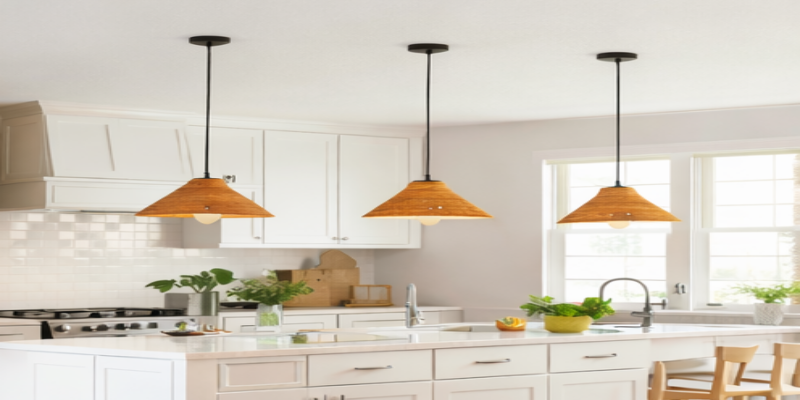
Kitchens with taller ceilings (9 feet and above) will require adjustments to the standard pendant light placement. As the ceiling height increases, the pendant lights should be hung higher to maintain visual harmony with the room’s proportions.
The general rule is to add 3 inches for every additional foot of ceiling height. This ensures that the pendant lights don't appear too low and disconnected from the overall room design.
Ceiling Height | Pendant Height (Range) |
9 feet | 33–36 inches |
10 feet | 36–42 inches |
For example, in a kitchen with a 9-foot ceiling, pendants should ideally hang 33–36 inches above the countertop. In a 10-foot ceiling setup, the pendant height should range between 36–42 inches to maintain balance.
When dealing with vaulted or sloped ceilings, achieving a consistent pendant light height above the island becomes more complex. The key here is to focus on consistent clearance between the bottom of the pendant and the island, regardless of the sloping ceiling line.
To ensure the pendant lights are aligned properly, using an adjustable pendant system or sloped ceiling adapters is highly recommended. These systems allow for the lights to remain visually consistent, even if the ceiling slope causes the rods or chains to be at varying lengths.
This approach ensures that the pendants are evenly spaced above the island, maintaining both visual balance and functional lighting. Adjusting the lights based on the ceiling's slope ensures that the final installation not only looks intentional but also functions effectively within the space.
The size and style of a pendant light significantly influence how high it should be hung above a kitchen island. Larger, more visually dominant pendant lights generally require extra clearance to avoid overwhelming the space. These fixtures, such as wide drum or globe shades, cast a broader pool of light, so they should be positioned closer to the 36-inch mark. This ensures that the light is evenly distributed without obstructing sightlines or making the room feel cramped.
On the other hand, smaller or lighter pendant lights, such as minimalist or transparent designs, can typically hang lower. These types of pendants can comfortably rest closer to the 30-inch mark without overwhelming the space. Their lightweight appearance allows them to blend into the room more subtly, offering functionality while maintaining a spacious feel.
The shade type of a pendant light also plays a crucial role in determining its hanging height. Pendant lights with opaque or closed shades (such as metal or ceramic) tend to direct light downward in a more concentrated beam. As a result, these pendants require a higher hanging position to prevent glare or harsh shadows while maintaining effective task lighting.
In contrast, pendant lights with translucent or open shades, like glass globes or fabric diffusers, offer a softer, more diffused light. These shades allow light to spread evenly across a larger area, so these fixtures can hang slightly lower, around the 30-inch range, without compromising the ambiance or illumination quality.
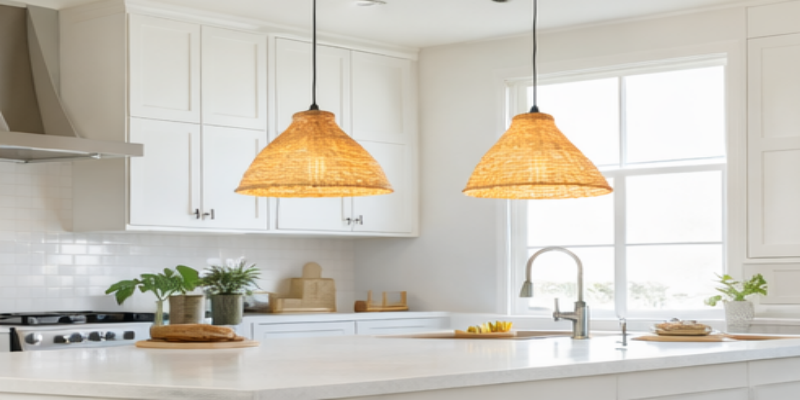
When hanging pendant lights, it’s essential to consider sightlines and head clearance, especially in open-concept kitchens. Pendant lights that hang too low can obstruct views, disrupting the flow between the kitchen, dining, and living spaces. To avoid this, pendant lights should be hung high enough to allow for clear sightlines across the room.
For taller individuals or families, pendant lights should be positioned slightly higher to avoid head bumps. Raising the lights closer to the 36-inch mark can provide additional comfort, ensuring enough clearance without compromising the light’s effectiveness.
Pendant lights serve two key roles: task lighting and ambient lighting. In kitchens used primarily for food prep, pendant lights should provide focused illumination directly over the island. Hanging them closer to the 30-inch range will concentrate the light on the work surface, enhancing functionality.
For islands used for dining or socializing, pendant lights should be placed slightly higher to provide a softer, more ambient light. The 36-inch range creates a more open, inviting atmosphere, making the space comfortable for conversation and dining.
Lighting Purpose | Recommended Height |
Task lighting (cooking) | 30 inches |
Ambient lighting (dining) | 36 inches |
The recommended spacing for pendant lights above a kitchen island is typically between 24–30 inches. This measurement ensures that the lights are properly spaced to provide uniform illumination across the entire surface of the island. The exact distance within this range will depend on factors such as the size of the pendant fixtures and the ceiling height. Larger fixtures may need more space between them, while smaller, more delicate lights can be placed closer together.
In addition to fixture size, the height of the ceiling also plays a role in determining the appropriate spacing. In kitchens with higher ceilings, pendant lights can often be spaced slightly closer together without overcrowding the space, while lower ceilings may require slightly more distance to maintain visual balance and avoid making the space feel cramped.
When using multiple pendant lights, achieving visual balance is essential. The number of pendants used—whether 2 or 3—impacts both the spacing and height choices. For two pendants, the fixtures should be spaced evenly, with the distance between each light determined by dividing the length of the island into thirds. For three pendants, the middle fixture should be placed centrally, with the other two evenly spaced to either side. This symmetry creates a harmonious look that feels both functional and aesthetically pleasing.
Number of Pendants | Spacing Recommendation |
2 | Divide island length into thirds |
3 | Center the middle pendant and space the others evenly |
One of the most effective ways to visualize the ideal pendant light height before installation is by using the balloon and string trick. This simple method allows you to see how the lights will look and feel in your space before making any permanent adjustments.
Step-by-step guide:
1. Inflate a balloon to a size that closely matches the diameter of your pendant fixture.
2. Attach the balloon to a string or painter’s tape to act as a stand-in for your pendant.
3. Hang the balloon above the island at various heights, adjusting the string length between 30 and 36 inches.
4. Step back and observe how the balloon interacts with the room from different angles, ensuring it feels balanced and unobtrusive.
5. Repeat this process at multiple heights to find the most natural and visually pleasing placement.
This technique gives you a good sense of how the pendant lights will look in the space and helps prevent any post-installation regrets.
When it's time to install your pendant lights, accurate measurements are crucial for the best results. Ensure that the height is measured from the countertop to the bottom of the pendant to guarantee consistency and visual balance.
Installation tips:
1. Measure carefully from the countertop to the desired pendant height, ensuring the lights align across the island.
2. Use a level to ensure the lights are hung evenly.
3. If adjustments are necessary, adjust the length of the cords or rods accordingly.
While DIY installation is an option, it's often recommended to work with a professional electrician. An expert can ensure proper installation and make any necessary adjustments for the best results. Electricians can also help with ensuring the lights are securely attached and meet safety standards.
This article discussed the ideal height for pendant lights above kitchen islands. It emphasized the importance of adjusting the height based on ceiling height, fixture size, and room function. For optimal lighting and aesthetics, it’s essential to balance task lighting with visual comfort. Zhongshan Maystar Lighting Co., Ltd. offers a variety of pendant lights, designed with both functionality and style in mind, making them a great choice for any kitchen.
A: The ideal height for a pendant light in an industrial kitchen is typically between 30-36 inches above the countertop, depending on ceiling height and fixture size. This ensures proper task lighting without obstructing sightlines.
A: Correct pendant light height enhances task visibility, improving operational efficiency in kitchens by providing direct lighting for food prep areas while minimizing glare and obstruction for workers.
A: Key factors include ceiling height, fixture size, and room layout. A higher ceiling may require pendant lights to hang slightly higher to maintain visual balance and ensure adequate task lighting.
A: Choosing energy-efficient pendant lights can reduce long-term maintenance and energy costs. Proper installation and regular upkeep ensure longer lifespans and avoid costly replacements.
A: Proper pendant light placement ensures focused task lighting, minimizing shadows and providing even illumination over work surfaces. This improves visibility and safety for kitchen staff, enhancing overall performance.
A: Incorrect pendant light height can lead to inadequate lighting, causing glare or dark spots. It may also obstruct movement or create safety hazards. Proper height ensures both functional lighting and a safe, efficient workspace.


